Rashid Street: The Heart of Baghdad in the Past Century
During the four centuries of Ottoman rule (1534–1917), eastern Baghdad consisted of a maze of narrow alleyways. These narrow passages helped provide shade in a city where summer temperatures often exceed 45°C (113°F).
When Rashid Street was constructed along the eastern bank of the Tigris, large sections of the old labyrinthine neighborhoods were demolished. Only a few homes belonging to influential figures and several important landmarks were preserved, which explains why parts of the street remain slightly crooked today.
Following the British conquest of Mesopotamia in 1917, Iraq experienced political and economic growth. Rashid Street gradually became Baghdad’s vibrant downtown. It eventually stretched from Midan Square, where the northern gate of medieval Abbasid Baghdad once stood, to the area near today’s Freedom Monument in the south.
Many of Baghdad’s first cinemas, theaters, and modern shops opened on Rashid Street. For many Baghdadis, it was where they first experienced modern urban life.
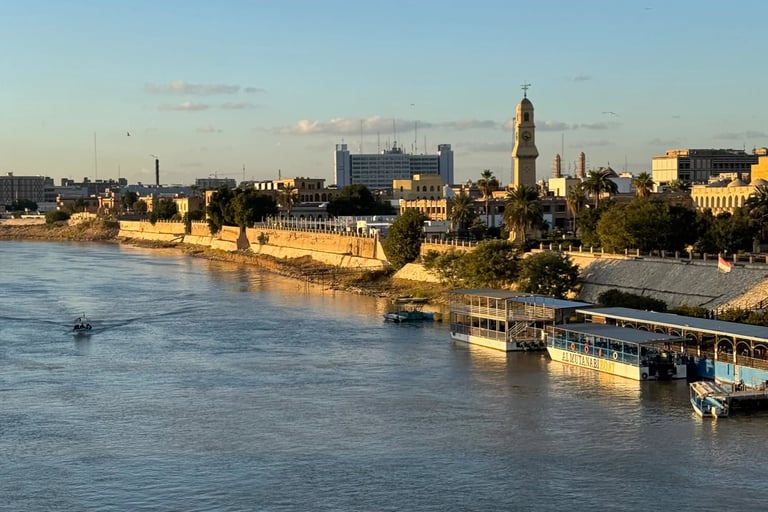
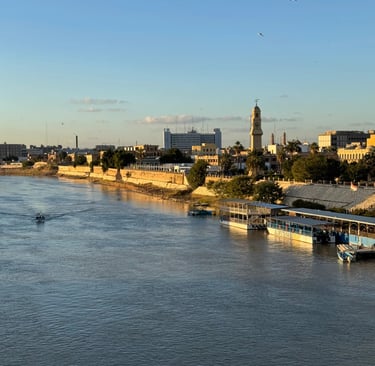
The Tigris River and the Eastern Side of Baghdad
Rashid Street is the first proper street in modern Baghdad. It was built in 1916 by the Ottoman governor and military commander Khalil Pasha to facilitate the movement of military carriages through eastern Baghdad, the city’s main urban area.
Baghdad was founded by the Abbasid Caliphate in 762 AD as its imperial capital. The original Round City was built on the western side of the Tigris River. Within a few decades, Baghdad expanded eastward across the river. Over time, the eastern side became the residence of the caliphs, while the western side gradually lost its prominence.
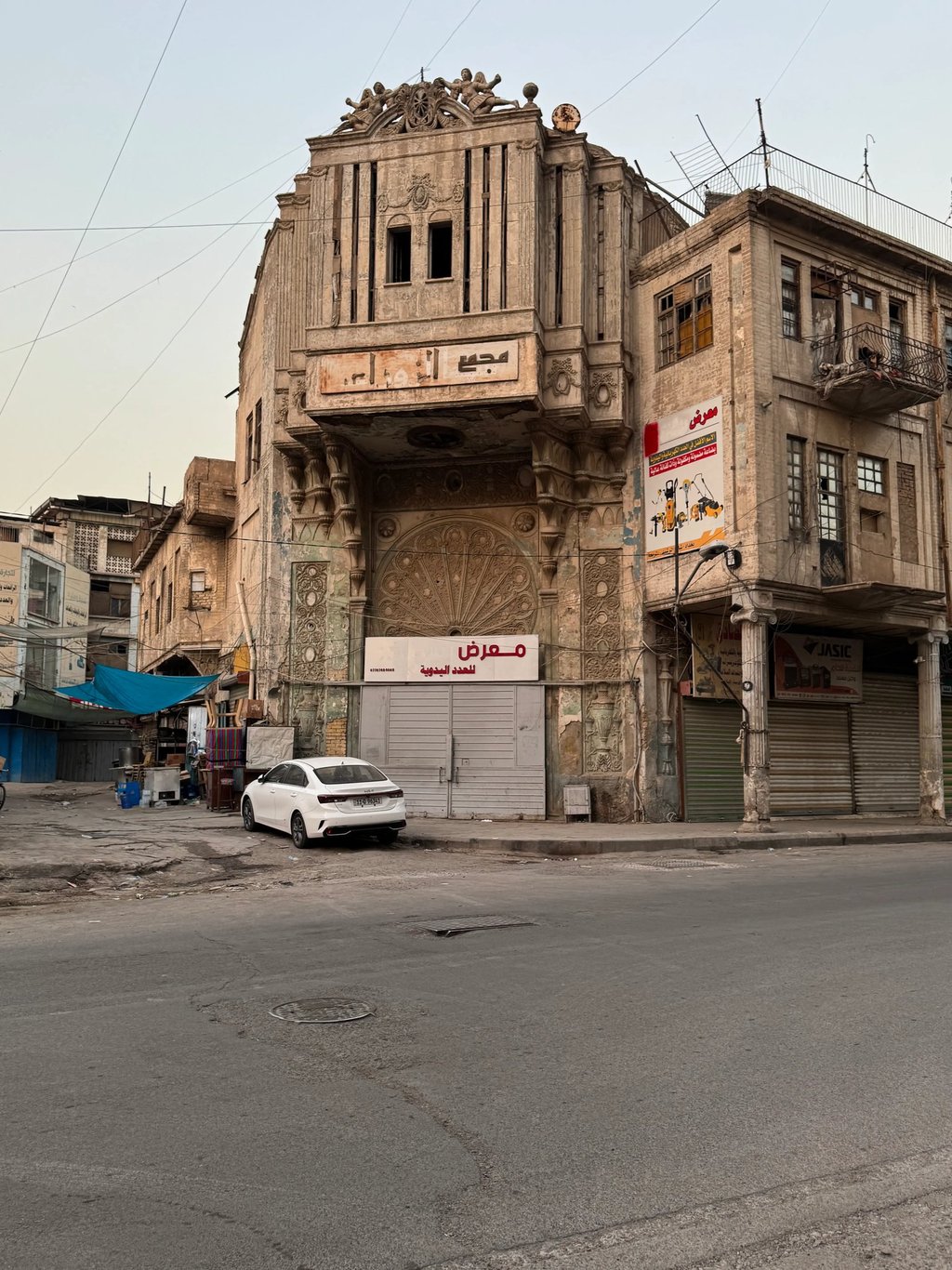
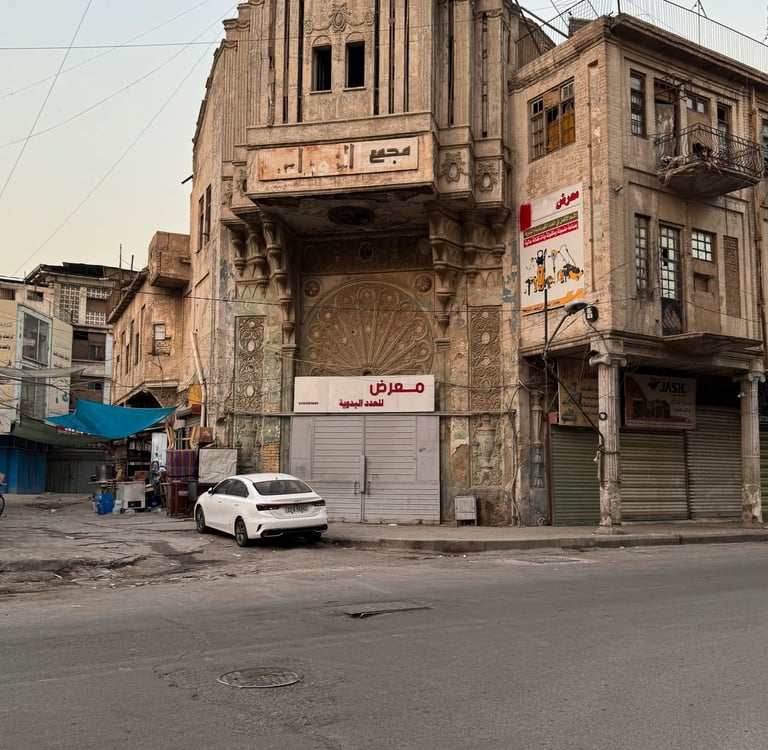
Al-Zawra Cinema in Rashid Street
The importance of Rashid Street extends beyond being Baghdad’s first modern street. It contains Abbasid remains, Ottoman-era buildings, historic mosques, traditional cafés, and bustling markets that reflect the city’s rich heritage.
Must-See Landmarks On Rashid Street
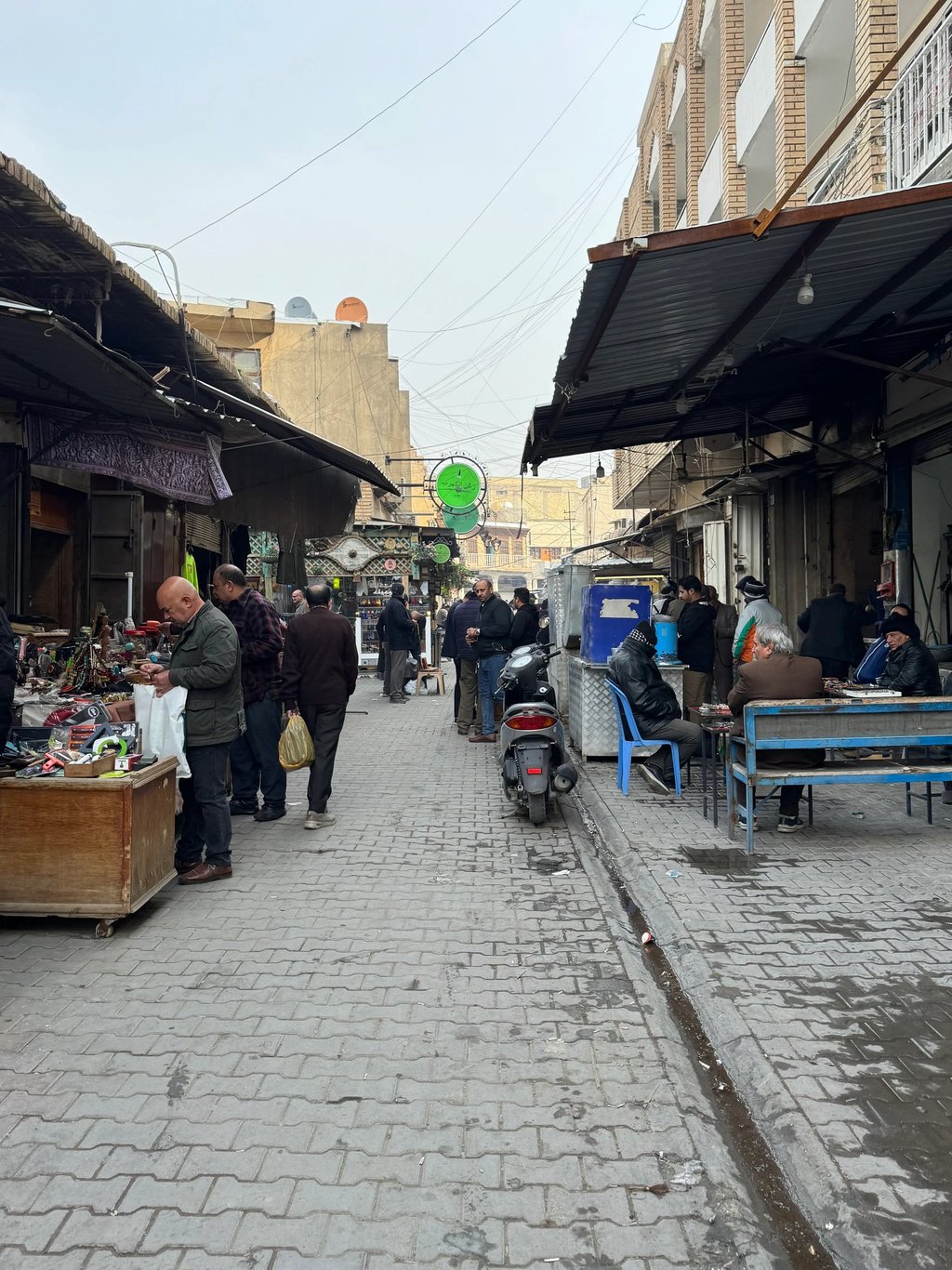
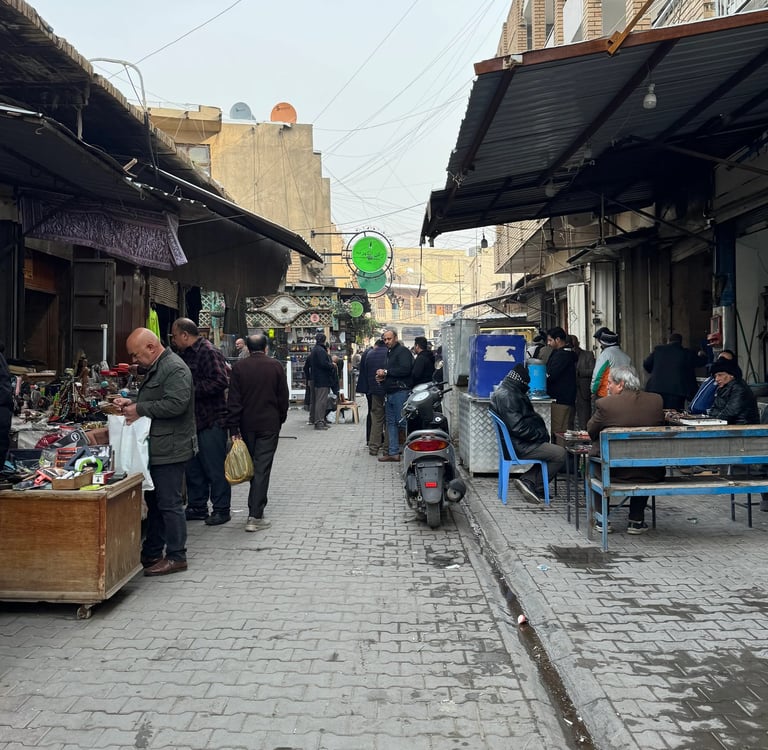
Harij Bazaar
Located near Haydar Khana Mosque, Harij Bazaar is known for semiprecious stones, prayer beads, antiques, and second-hand goods. The market retains a traditional atmosphere and is especially busy on Fridays.
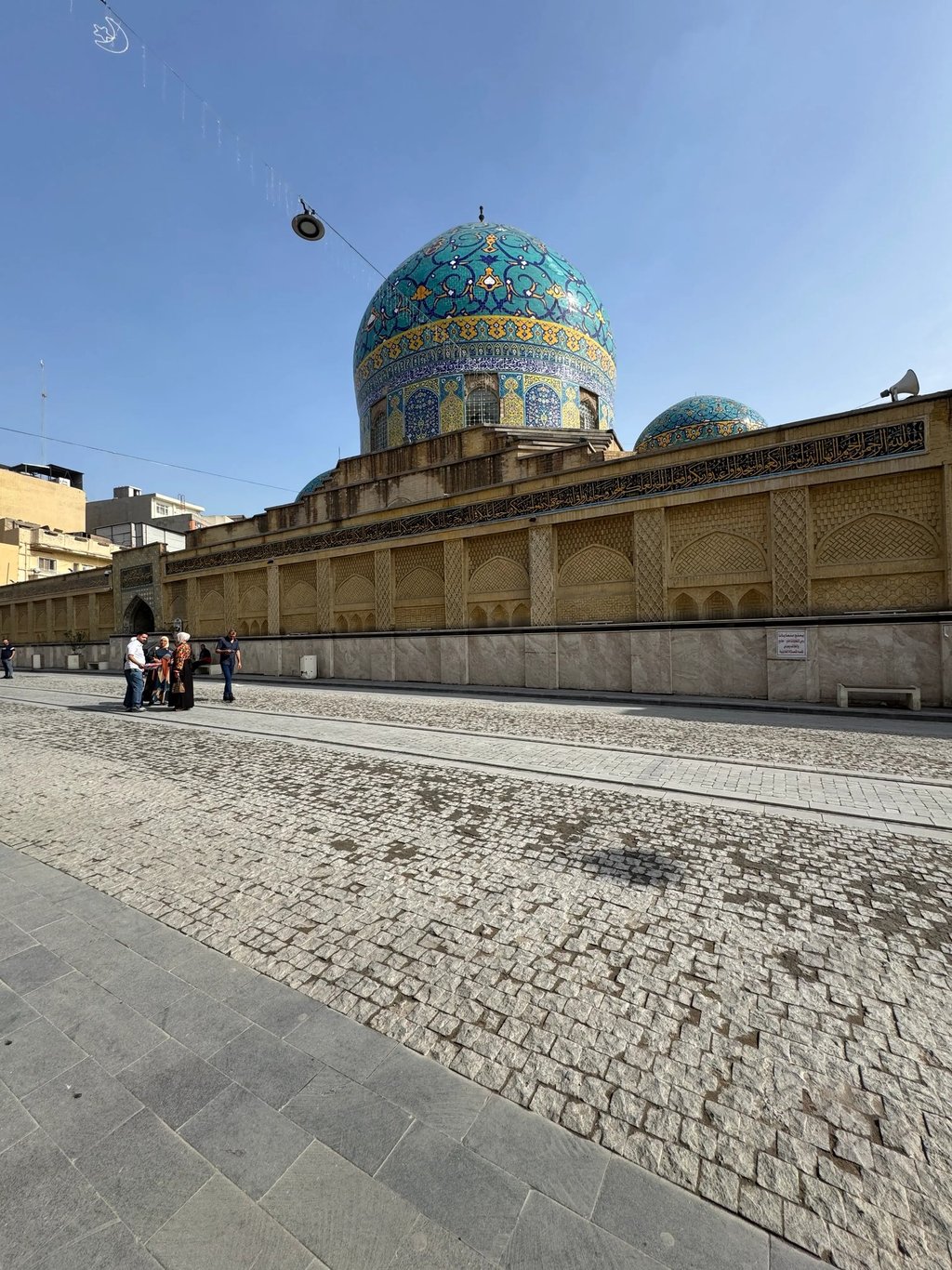
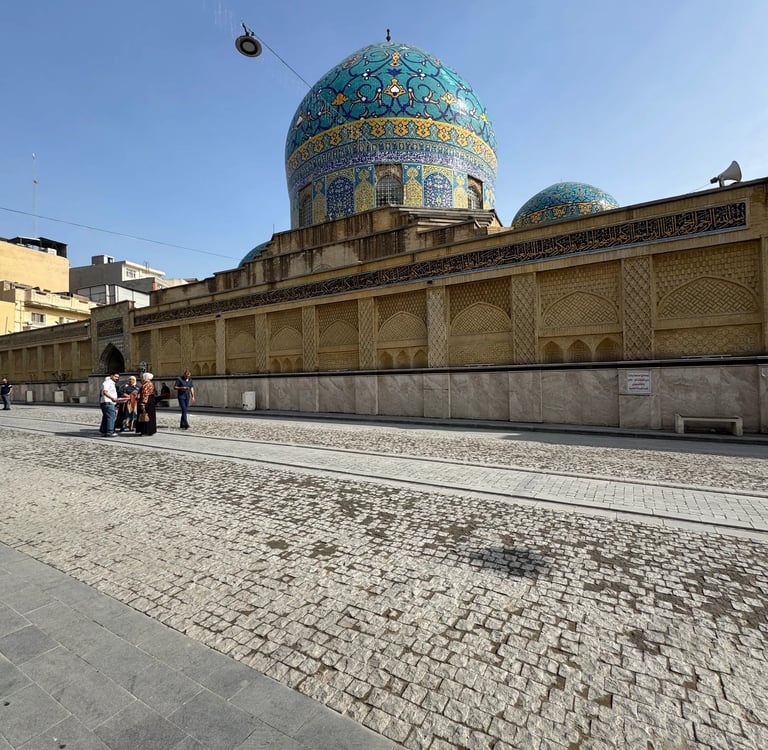
Haydar Khana Mosque
Built in 1827, the mosque is easily recognized by its ornate blue dome overlooking Rashid Street. It played an important role during the Revolution of 1920 against British rule. Revolutionaries, poets, and public speakers gathered here to inspire and mobilize the population.
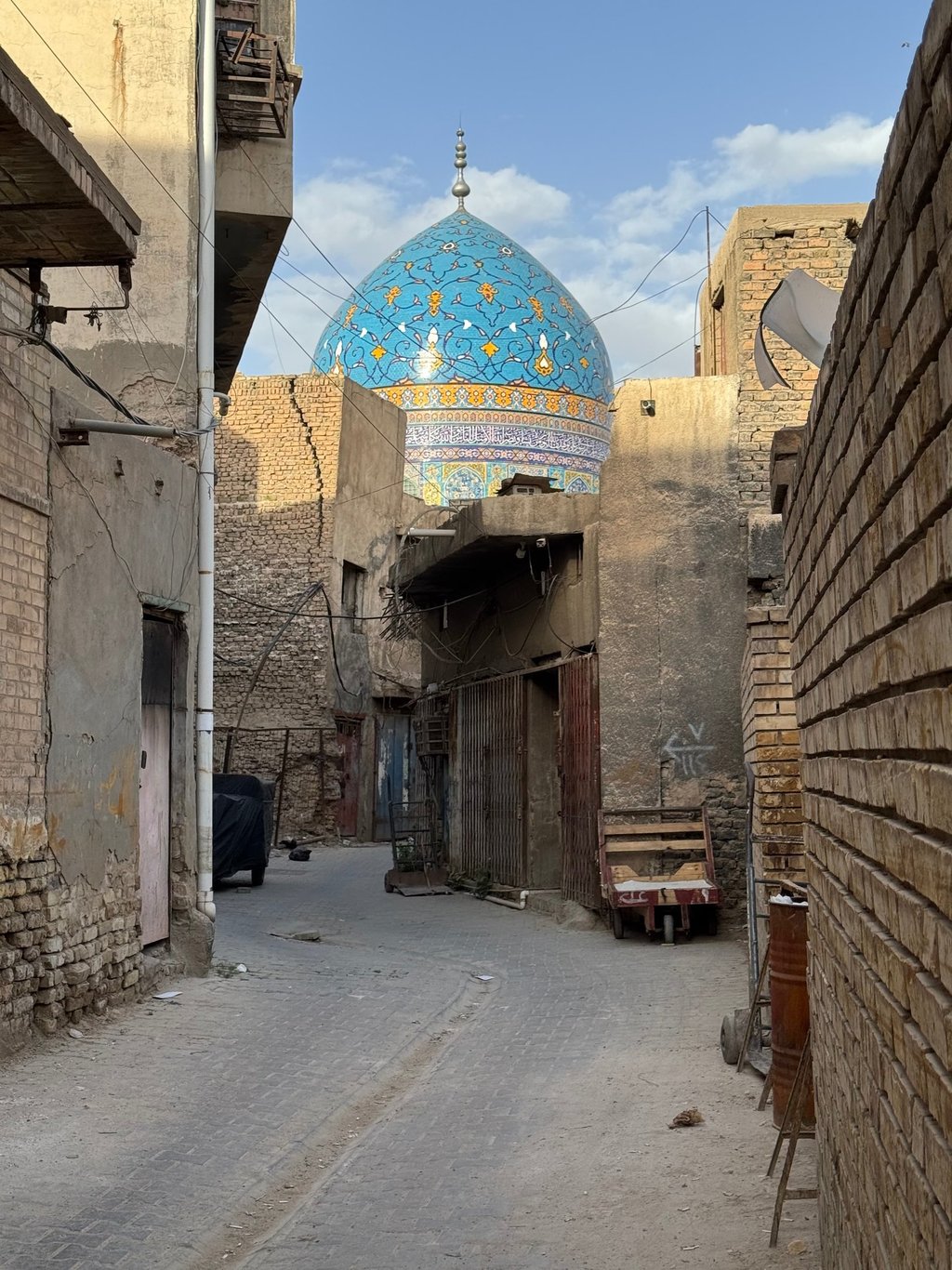
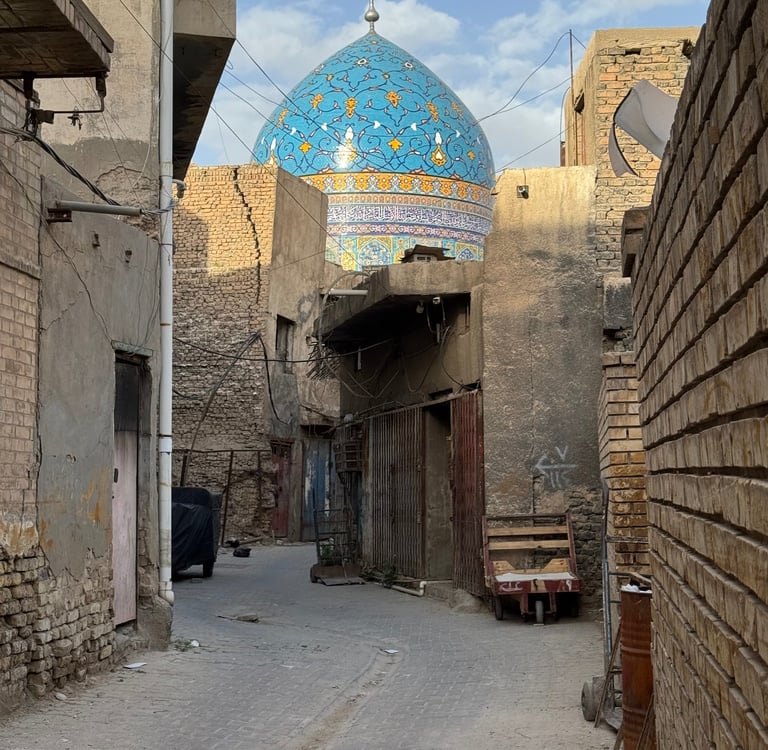
Ahmedya Mosque
Built in 1796, Ahmedya Mosque has a dome similar in shape and color to that of Haydar Khana Mosque. One of its most photogenic features is a narrow alleyway from which the dome dominates the view. The mosque is named after Ahmed Pasha, the deputy governor of Baghdad at the time.
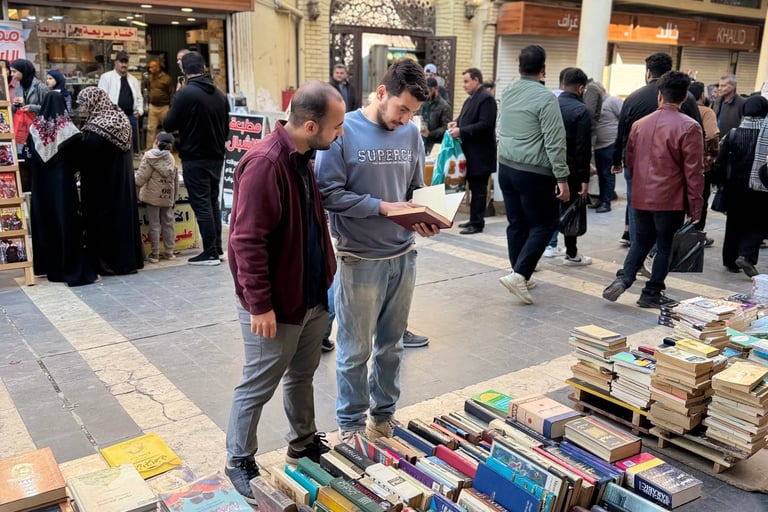
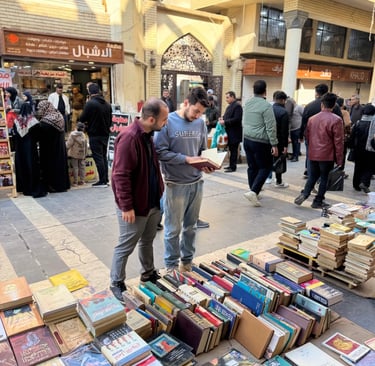
Mutanabbi Book Street
Mutanabbi Street is Baghdad’s famous book market and intellectual hub. Readers, students, academics, and writers gather here to browse and purchase books. Most publications are in Arabic, though English and French books can also be found.
Zahawi Cafe
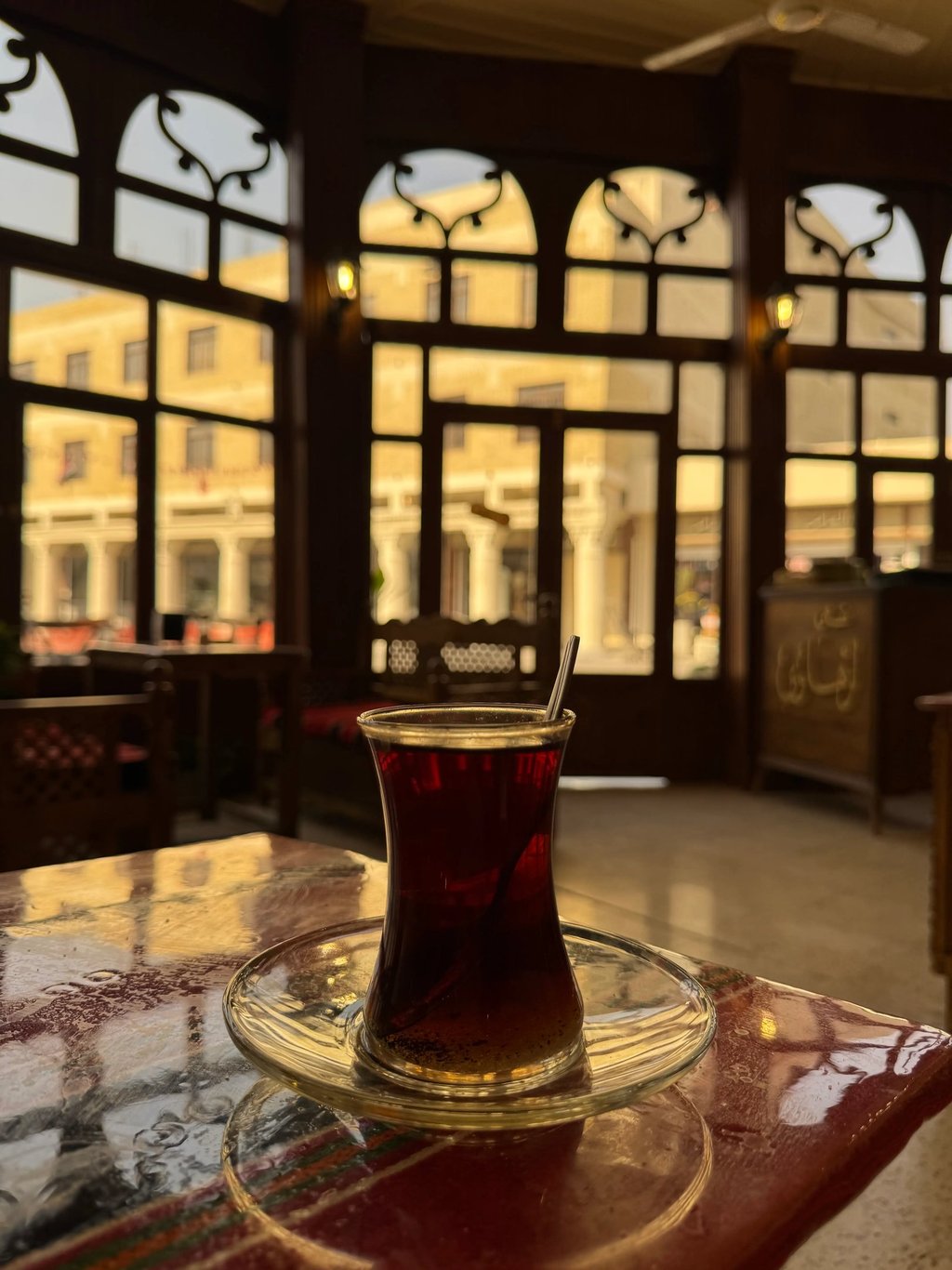
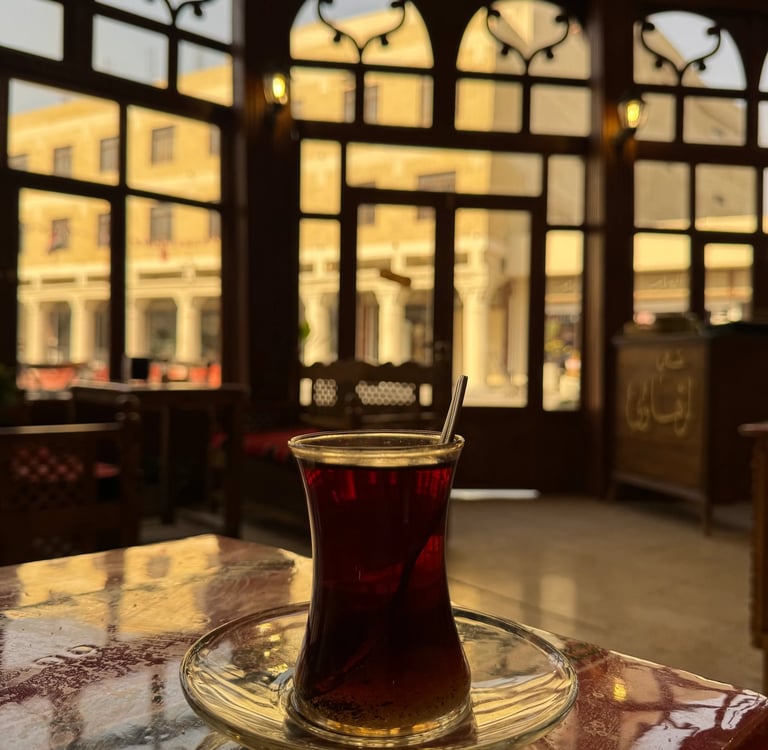
Founded in 1917, Zahawi Cafe is one of Baghdad’s oldest surviving cafes. Located on a corner of Rashid Street, its glass façade offers excellent views of daily street life while visitors enjoy tea or coffee. The cafe is named after the renowned Iraqi poet Jamil Sidqi al-Zahawi who used to frequent the cafe.
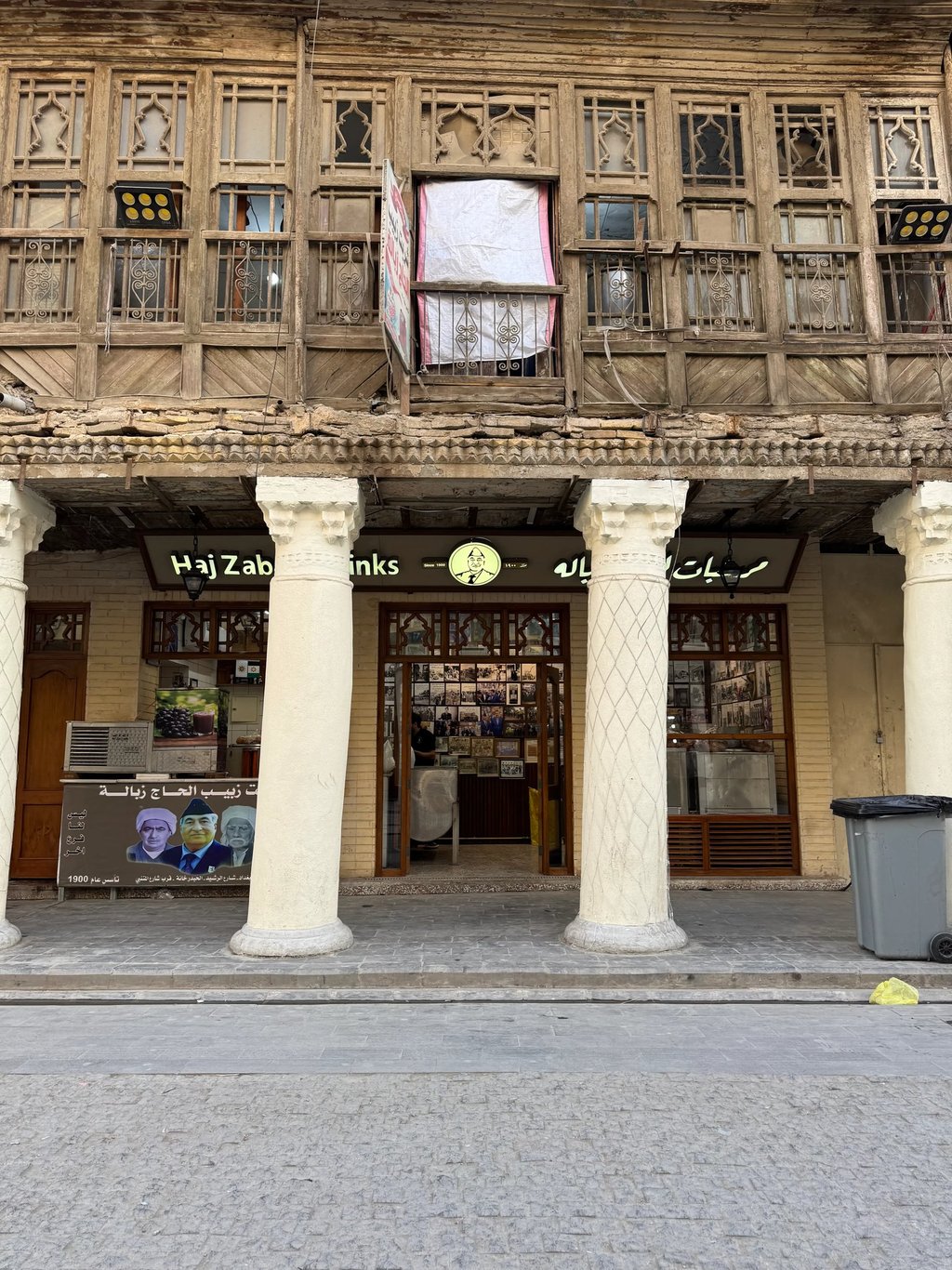
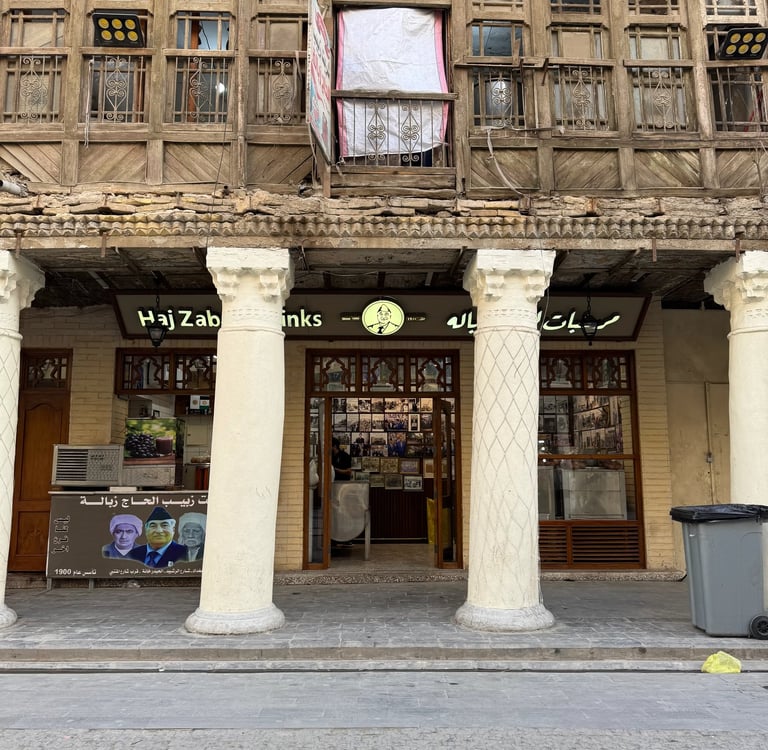
Haji Zebala Raisin Juice Shop
Known for its refreshing raisin juice, this historic shop has become a favorite stop for visitors. The unusual name “Zebala” means “trash” in Arabic. According to local tradition, children born after several deceased siblings were sometimes given unattractive names to ward off the evil eye. The shop has welcomed many notable visitors, including Iraqi kings and former president Saddam Hussein.
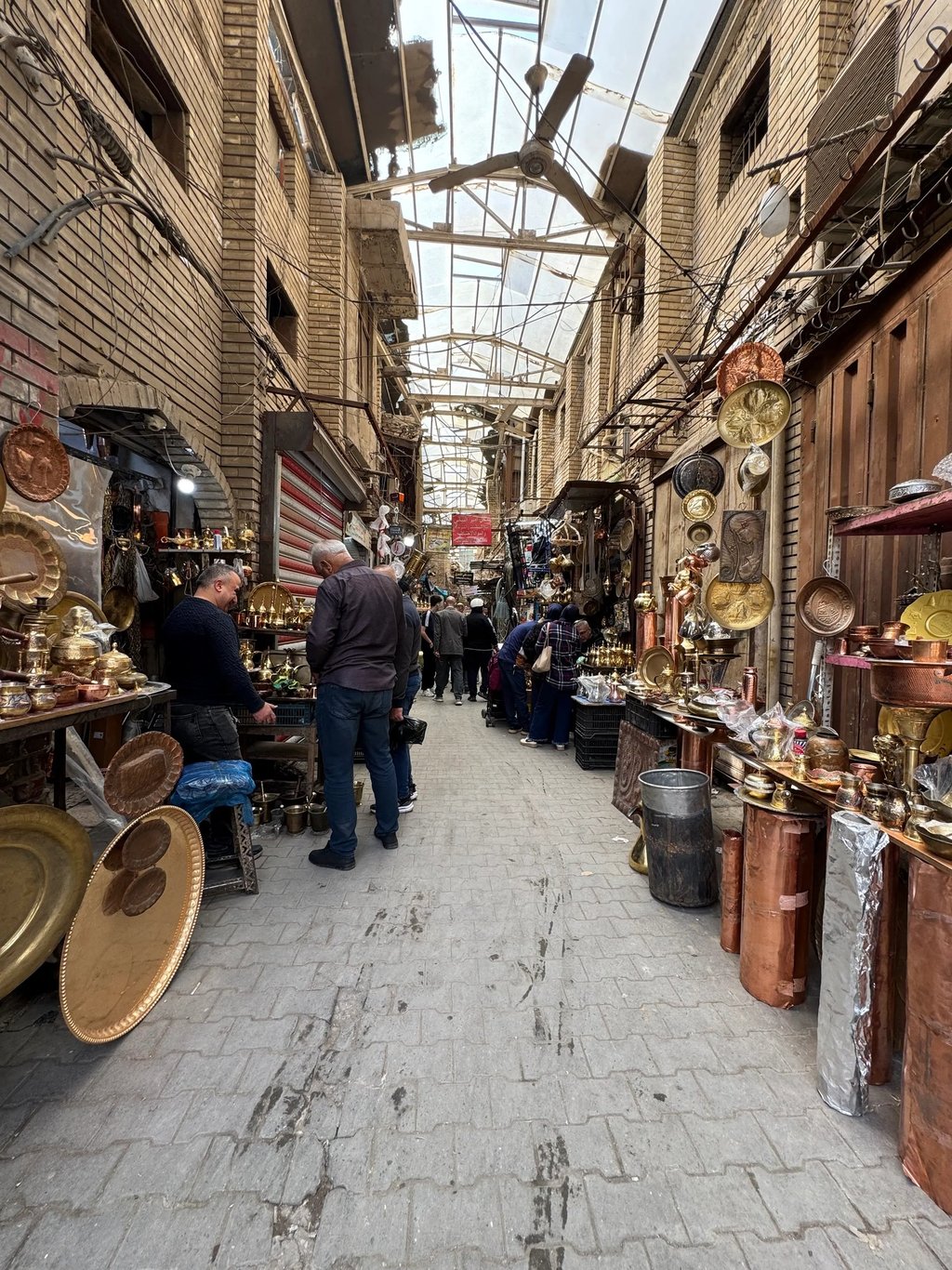
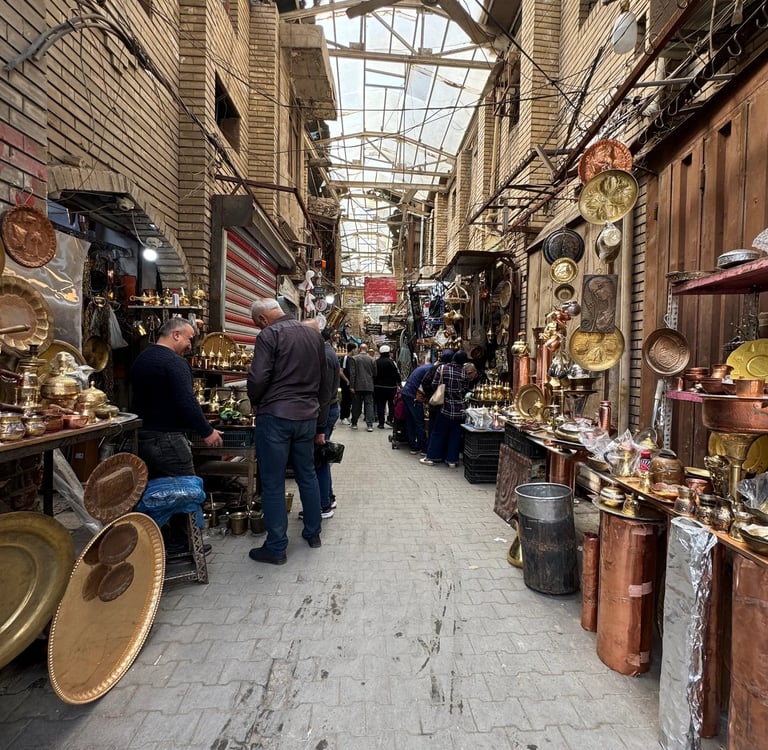
Copper Market
Dating back several centuries, the Copper Market has long been a center for traditional metalworking. Although less active than in the past, artisans still produce handcrafted coffee pots, trays, and decorative items engraved with motifs inspired by Iraq’s heritage.
Khan Murjan
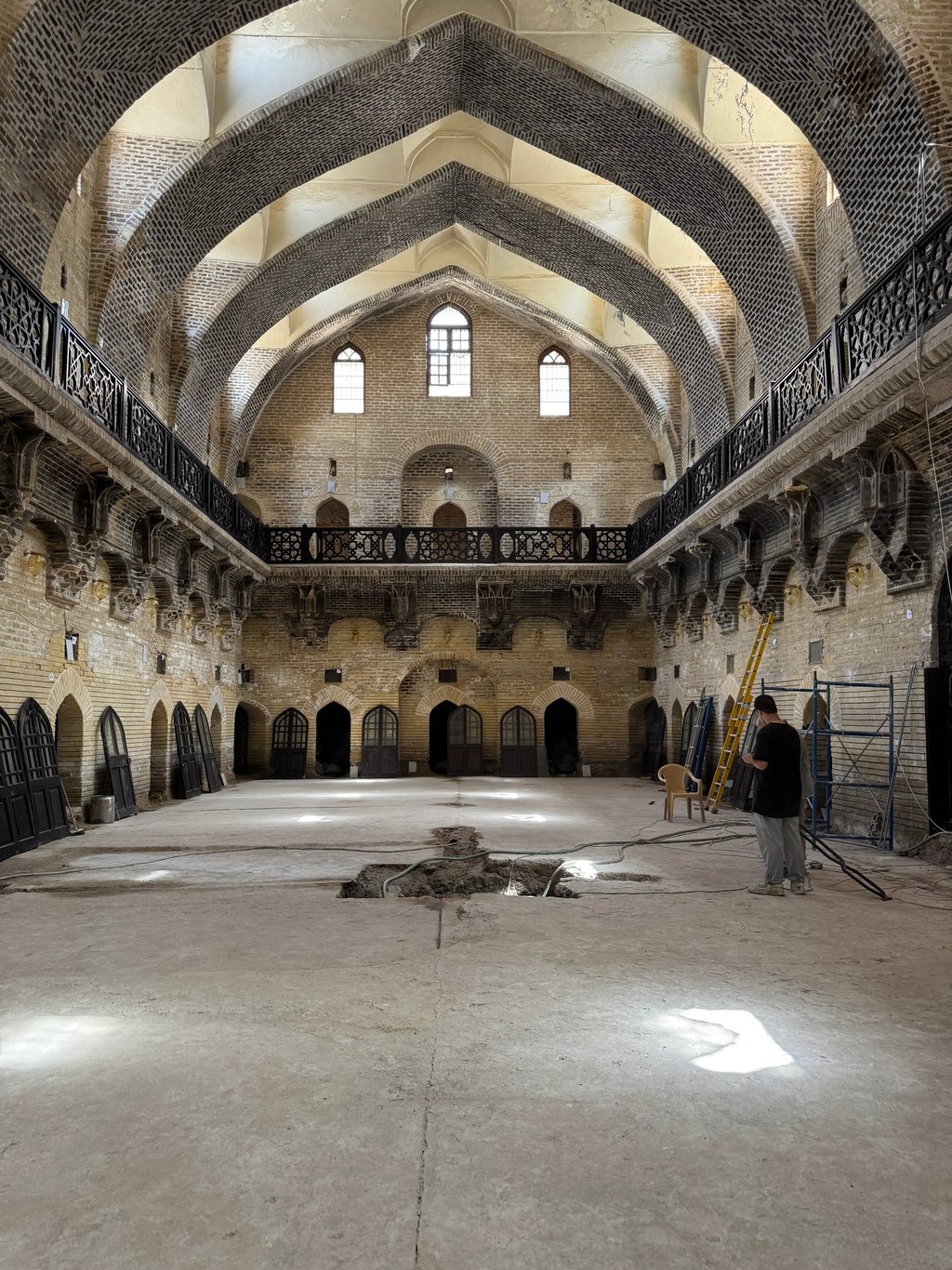
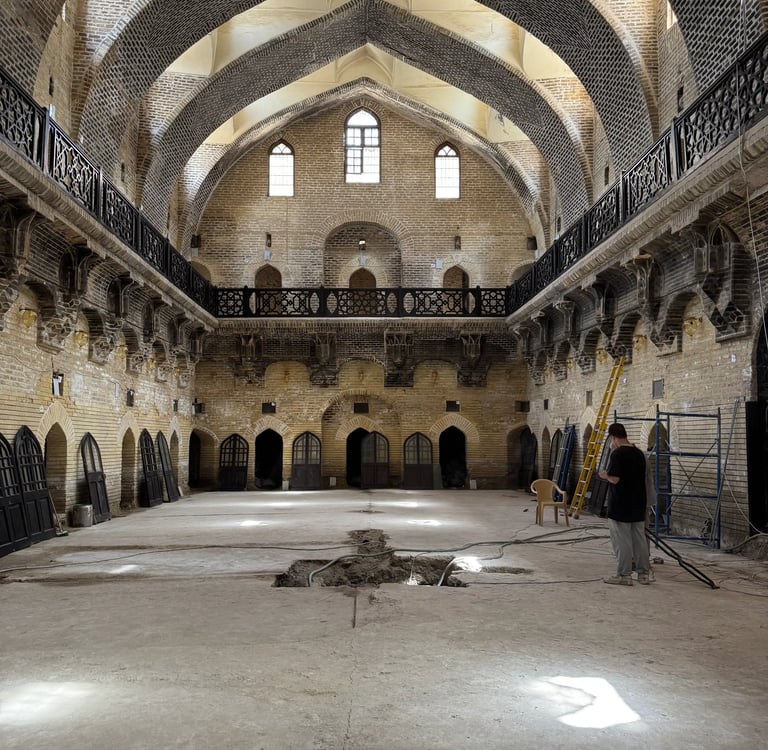
Built in 1356, Khan Murjan is one of Baghdad’s most remarkable historic caravanserais. It is famous for its distinctive vaulted architecture. During the 1970s and 1980s, it also served as a venue for traditional musical performances and cultural events.